Why we'll never build a Salesforce
A daft question
I spent this morning rewriting the PolicySight homepage with Claude, and somewhere in the middle of it I asked a daft question. Could we ever build a Salesforce?
I meant it as a joke. It turned into the clearest explanation of our business model I've found so far, so I'm writing it down.
Software used to come in a box
If you're of a certain age you'll remember buying software. It came on a disc, you installed it, and it was yours. If it did the job, you could still be running it five years later without paying anyone another penny.
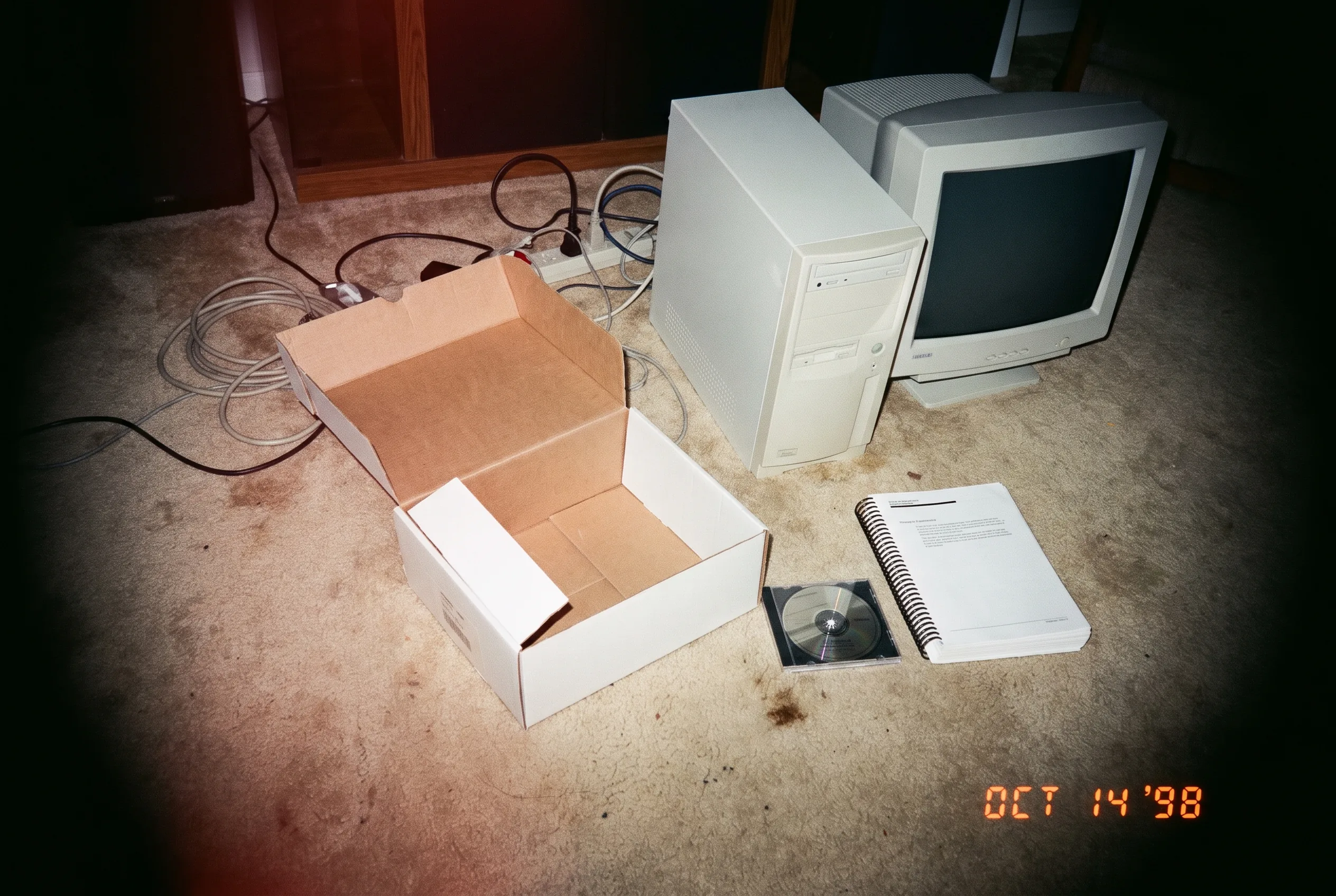
The overhead was equally real, mind. Companies bought software the same way, just in a bigger box with a licence for fifty seats, and the work of running it was theirs too. Somebody had to ship you the new version. Your IT team ran the servers, applied the patches, took the backups. Multiply that across every product a company ran and it was a genuine burden.
Why renting won
Subscription software fixed real problems, and it's worth being honest about that.
The browser fixed distribution: one copy, centrally hosted, everyone on the latest version. The vendor took the hosting, so the servers and the patching stopped being your problem. And a subscription was easier to buy, thirty pounds a month per user sailed through sign-off where a fifty thousand pound licence needed a committee.
So renting bundled two services: building the software and running it. For a while, that bundle was worth the rent.
Then the money noticed. Investors pay far more for recurring revenue than for one-off sales, so every vendor that could force the switch did. Adobe stopped selling Photoshop in a box in 2013, and the product didn't need to get better for the business to get enormous. Once your data lives inside a vendor's platform, leaving is painful, and the pricing power at every renewal sits with them.
And the customer's overhead never actually went away. It got renamed: contract renewals, vendor management, security reviews, waiting on someone else's roadmap for the feature you need.
What changed
Two things, one loud and one quiet.
The loud one is AI. I'm not a software engineer and I've never claimed to be, but I've lived this change first hand: domain software that used to need a big team and eighteen months can now be built by a small, careful team in a fraction of the time, with a human reviewing everything before it ships. Building software is no longer scarce.
The quiet one is that most companies already own a platform. If you run Microsoft 365 you already pay for a database, a document store, an identity system and a place to run code. It all sits inside your own Microsoft environment (your "tenant", as the jargon goes, apologies). The running half of the bundle, the half you rented a vendor for, is in a licence you've already bought.
Building is no longer scarce, and your tenant already does the running. All that's left of the subscription is the invoice.
So, does that mean SaaS is dead?
No, and my daft question is the reason why.
Could we build a Salesforce? The CRM part, the part you'd assume is the hard bit, is genuinely buildable. Records, pipelines, activities, permissions, sitting on a database. Microsoft's own Dynamics runs on the same engine our applications do.
But the product was never really the CRM. Salesforce sells an ecosystem: thousands of integrations, a marketplace of add-ons, an army of certified administrators, and decades of enterprises wiring their revenue through it. That moat is made of network effects, and no amount of clever building crosses it. Nobody should self-host their way out of Salesforce, and I won't pretend otherwise. That kind of SaaS is going nowhere.
The same moat cuts the other way, though. It protects the giants, and it does nothing for the thousands of ordinary subscription products that are a database with a workflow on top, sold by the month, where the main thing keeping the customer is the pain of leaving.
The hundred small things
Monoliths exist because building used to be scarce. When software is expensive, you buy one giant thing and bend your business around it. When building is cheap, software breaks back into fitted pieces, built for one job, owned outright by the people who use them.
That second world is the one we're building for: the committee portal, the disaster recovery testing, the contract management. The tasks every corporate runs that never justified venture-scale software, and so never got any.
So no, we'll never build a Salesforce. We'll build the hundred things it never could, and you'll own every one of them.
Governance Hub was the first out of the workshop. Disaster recovery testing is next.